Subterranean termite treatment in Memphis targets the destructive eastern subterranean termite (Reticulitermes flavipes), an insect that nests deep in Shelby County soil and tunnels upward into wooden structural sills…
Subterranean termite treatment in Memphis targets the destructive eastern subterranean termite (Reticulitermes flavipes), an insect that nests deep in Shelby County soil and tunnels upward into wooden structural sills via protective mud tubes. Because Memphis sits along the Mississippi River alluvial plain, local soil features elevated moisture levels and dense clay deposits that protect subterranean colonies from drying out. A homeowner in Cooper-Young or Central Gardens with a raised brick-and-pier crawl space faces different perimeter pressure than a modern concrete-slab residence in Cordova or East Memphis. Subterranean termites require continuous ground contact to survive, using soil moisture to maintain humidity within their shelter tubes while consuming structural cellulose inside floor joists, stud bays, and band boards. Standard spray treatments applied only to baseboards fail completely because workers stay hidden within structural timbers and subterranean galleries without contacting surface residues.
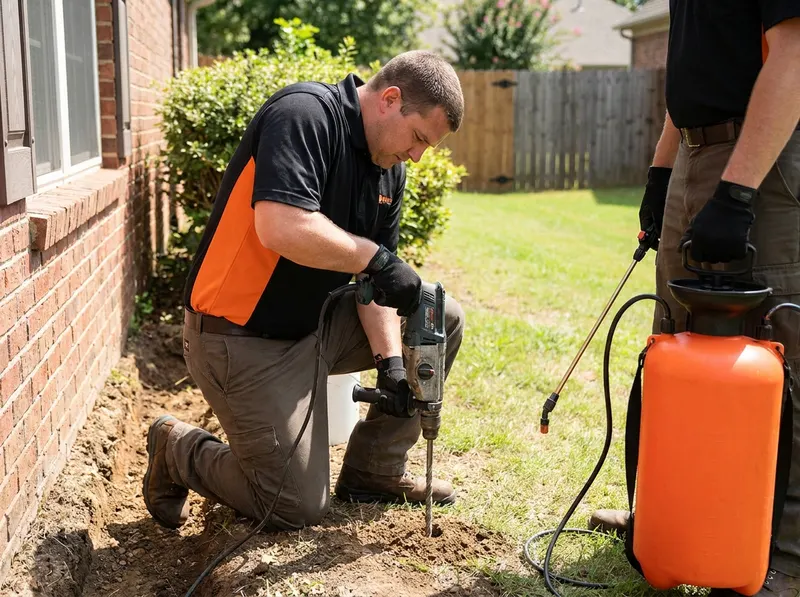
Halting structural degradation requires establishing an unbroken chemical or physical perimeter barrier around the foundation footprint. Liquid defense protocols use non-repellent termiticides applied by continuous exterior trenching (digging a 6-inch by 6-inch trench immediately adjacent to foundation walls) at a target volume of 4 gallons per 10 linear feet per foot of depth, adhering strictly to EPA pesticide safety standards. In structures featuring abutting masonry, such as front porches in Midtown or garage aprons in Berclair, technicians drill 1/2-inch holes through concrete flatwork every 12 inches to saturate sub-slab soils. Unlike repelling chemicals that simply redirect foraging workers to alternate entry points, non-repellent formulations are undetectable; foraging termites walk through the treated zone, absorb the active ingredient, and transfer lethal doses to nestmates and the queen via trophallaxis within 30 to 90 days. For structural environments where continuous ground trenching is prevented by root systems or brick terraces, low-profile bait systems loaded with chitin synthesis inhibitors provide an alternative elimination method as outlined by the National Pest Management Association.
Homeowners often weigh comprehensive perimeter liquid barriers against decentralized bait station arrays. While liquid treatments establish an immediate subterranean protective boundary that protects the structure for five to ten years without requiring monthly tampering, bait stations offer a trenchless alternative suitable for historic Downtown Memphis structures or homes directly bordering fragile ornamental plantings near the Memphis Botanic Garden. The physical trade-off is maintenance cadence: bait systems demand quarterly inspection visits and active cylinder replenishment to remain viable, whereas full perimeter trench barriers deliver passive biological containment. Homes located near waterways, such as neighborhoods along the Wolf River Greenway or homes in Raleigh and Whitehaven near wet ravines, require calibrated application methods governed by the Tennessee Department of Agriculture regulatory rules to avoid product runoff into groundwater. DesertBloom Pest Defense executes single-protocol defense plans engineered to eliminate the colony at its subterranean source without forcing clients into mandatory recurring contracts.
Every job gets a firm, written price after a free on-site visit.
Tell us about your subterranean termite treatment job in Memphis and we'll send a clear, written quote, usually the same day.
 DesertBloom Pest Defense